
History of the Iowa Poetry Association
From roots in the historic Younkers Tea Room in Des Moines to modern hybrid-style events, the Iowa Poetry Association has a rich history across Iowa. What began in 1945 has evolved into a thriving statewide poetry society. Many Iowans have had a hand in growing IPA into what it is today. Read all about our history below.
IPA's History Timeline
October 1943
October 1945
1946
1947
1948
1955
1969
1975-76
1989
2017
2021
2022-23
2024
Agnes V. Flannery (pictured below) is credited with creating the association by encouraging then Governor Hickenlooper to proclaim the third Friday of October as Iowa Poetry Day in 1943.
The first meeting of the statewide poetry association at the historic Younkers Tea Room in Des Moines, Iowa. First publication of an Iowa anthology, edited by Grace Noll Smith.
Brochure of Poems published, edited by Grace Noll Smith.
Iowa Poems renamed and published, edited by Grace Noll Smith.
Lyrical Iowa renamed and published, edited by Grace Noll Smith
Ruth DeLong Peterson takes over as Lyrical Iowa editor.
Virginia Blanck Moore takes over as Lyrical Iowa editor.
Iowa Poetry Association joins National Federation of State Poetry Societies (NFSPS).
Lucille Morgan Wilson takes over as Lyrical Iowa editor.
Marilyn J. Baszczynski takes over as Lyrical Iowa editor.
IPA partners with Iowa Student Poet Ambassador program coordinated by the University of Iowa's Office of Community Engagement.
The IPA Poetry Slam establishes its first annual contest to determine Iowa champion to represent at the annual NFSPS BlackBerry Peach National Poetry Slam.
Iowa Poetry Association, Inc. establishes as a 501(c)3 nonprofit. Plus, the Poetry Palooza group becomes a committee of IPA.

Past IPA Presidents
1945 - 1949 AGNES FLANNERY, Des Moines
1949 - 1950 RAYMOND KRESENSKY, Algona
1950 - 1953 GRACE HUNTER, Grinnell
1954 - 1957 MAUDE T. WALROD, Des Moines
1957 - 1959 THOMAS F. DUNN, Des Moines
1959 - 1961 MARY ALICE HART, Creston
1961 - 1964 LOUIS A. HASELMAYER, Mt. Pleasant
1965 - 1967 PEARL J. MINOR, Mason City
1967 - 1969 FRANKLIN GROOMES, Menlo
1969 - 1971 CAROLYN JORDAN, Des Moines
1971 - 1973 ALETHA HUMPHREYS, Toleda
1973 - 1975 ELEANORA MILLER, Leon
1975 - 1977 MAX BARKER, Marshalltown
1977 - 1979 LUCILLE E. MORGAN, Des Moines
1979 - 1981 WILL C. JUMPER, Ames
1981 - 1982 LOREN C. GRUBER, Indianola
1982 - 1985 PAT KING, Albia
1985 - 1988 RALPH SPEER, Des Moines
1988 - 1992 LOREN C. GRUBER, Clarinda
1992 - 1996 PAT KING, Albia
1996 - 2000 DAVID STOKESBARY, Gowrie
2000 - 2004 BILL RUDOLPH, Grinnell
2004 - 2008 RONALD H. KAHL, Burlington
2008 - 2011 JERRY L. FERRELL, Des Moines
2011 - 2014 DENNIS D. MAULSBY, Ames
2014 - 2016 MARILYN J. BASZCZYNSKI, Earlham
2016 - 2022 JERROLD NARLAND, Winterset
2022 - Current DAWN TERPSTRA, Lynnville
A History of the Iowa Poetry Association, 1945 - 2025 in Two Parts:
1. The Iowa Poetry Association – 1945-2020
Written by Lucille Morgan Wilson in 2020
“Every poem is a temporary stay against the confusion of the world.” – Robert Frost October 1945: Emerging from the grip of World War II, burdened with recovery and rebuilding, and still embroiled with Japan, the atmosphere of the time held little of the beauty and serenity associated with lyricism. Younkers Tea Room, at 8th & Walnut Streets in downtown Des Moines was an oasis in a maelstrom. Since its opening a couple of decades earlier, the Tea Room was known for its elegance – and its delicious sticky buns. While we have no registration list of those present on October 20 or 21 (exact date is uncertain), this was the birthplace of the Iowa Poetry Association. Like many a birth, there were agonizing pains. The ladies, dressed in finery, certainly with hats and white gloves, were soon to discover that peace did not come easily. Agnes V. Flannery is often credited with creation of this first state-wide poetry association, [by first convincing then Iowa Governor Hickenlooper to proclaim the third Friday in October as Iowa Poetry Day in 1943, then helping to formally launch the Association in October 1945]. However, it seems that Ms. Flannery was associated with the Iowa Poetry DAY Association and the split that occurred over the name and other issues was nearly as volatile as efforts to reconcile world powers after the War. In the scraps of records that survive the day, the names of several key players stand out: Raymond Kresensky, of Algona, had headed the Iowa portion of FWP (Federal Writers Project), part of the New Deal’s WPA, whose objective was to support the arts and engage writers in producing a history of Iowa’s towns and cities, Indian [Native American] heritage, and the state’s natural features. A poet himself, Kresensky left the FWP in 1939, but continued to encourage and assist in the formation of poetry groups. One of IPA’s founders, he served as treasurer, one of its first presidents, and was instrumental in the publication of Lyrical Iowa. Some of his letters are preserved in the State Historical Library at Iowa City. Grace Noll Smith, teacher and librarian, associated with Grinnell College, was the first editor of Lyrical Iowa. A decade or so later that position was in the capable hands of Ruth DeLong Peterson of New London. Virginia Blanck Moore, Des Moines, was Ruth’s able successor, followed 14 editions later, in 1989, by myself, Lucille Morgan Wilson. In 2017, Marilyn Baszczynski stepped into this role. Given the precedents, she is surely aware this is a long-term commitment. In her 1971 Editor’s Report, Ruth DeLong Peterson pays tribute to others – associate editors and judges, teachers, and all who have also shaped our publication. Too numerous to list here, we recognize the labors from preparing and distributing contest information to shipping out the completed anthology as a combined effort. Each of the editors-in-chief would agree to that. However, the length and devotion of time and skills given, indicate need to mention Dr. Louis A. Haselmayer, Iowa Wesleyan College (Mount Pleasant), who after four years as IPA president continued as workshop critic for several years; Dr. Ralph Speer, Grandview College (Des Moines), who contributed much over a number of years as associate editor and as workshop critic; Dr. Paul Blakely (Drake University ?), associate editor for twenty years; Dr. Mildred Bensmiller (Iowa Wesleyan College, Mount Pleasant), College Editor). Dr. Loren C. Gruber (Simpson College) served several terms as president, often was a workshop critic, driving back from Missouri as long as health permitted. Several others associated with colleges and universities gave their time and talented energies toward the production of our annual volume of poetry. We do not know the involvement of Jessie M. Parker, Iowa’s Superintendent of Public Instruction (1927-??), but her name is included in the short list of early IPA officers. Our state Department of Education has been extremely cooperative in helping publicize our contests through the years. The earliest edition of Lyrical Iowa in my possession is 1948. The 1949 book says it is the 5th edition, so even from that year of formation we have witness to the poetic aspirations of Iowans. 53 poems by students, 2nd through 12th grades, from schools from Coin to Keokuk, from Sioux City to Muscatine, fill 18 pages of the 86-page book. Sixth grader Marilyn Vogel offers this quatrain on a subject that intrigues poets of all ages endlessly. See e.e. cummings, Amy Lowell, Wallace Stevens, Robert Louis Stevenson, and more. Here’s Marilyn’s insight: THE MOON The moon is big and round, It has a yellow face, It looks to me like a pound of cheese Sitting on a base. Both size and appearance of Lyrical Iowa have changed over the years, from a fold-over, stapled chapbook style of some 80 pages to what printers call “perfect-bound” in 1977 of 128 pages, Virginia Blanck Moore, editor. With additions through the years of contest categories for Humorous Verse, Sonnets, Haiku, National/World Events, Poems FOR Children, and College, we have nearly 180 pages, which allows space for almost 400 poems. Advances in the printing process led us to using colorful generic scenes on book covers in 1972. A few years later, Sharon Becker sent your editor an Iowa scene she had photographed. Thus began our custom of choosing from member submissions of woodlands, farmyards, and small towns in varied seasons to enhance the book’s exterior. Cost of the book has necessarily risen, from 30 cents to $2.00 (1971) to $7.00 (1995) to the present $10.00, with a variance for order date and shipping charges. As many as 850 books have been sold. Public libraries have held standing orders for nearly a hundred of these, although the number is gradually reducing, with budget cuts and electronically accessed reading material. Masthead of our newsletter, designed by Larry Link at the beginning of this century and used until a recent modernization, affirms our membership in the National Federation of State Poetry Societies (NFSPS) and affiliation with the Academy of American Poets. The latter is an “associate” designation because of our annual small contribution made toward their support. IPA joined NFSPS in 1975 or 1976, during Max Barker’s presidency. I remember the vote to join at the business meeting in the dimly-lighted Kirkwood Hotel basement, never dreaming that I would be one of the delegates attending national conventions in Salt Lake City, Albuquerque, Harrisburg (PA), Deerfield (MI) or wherever the annual meetings were held. [Personal note: Up to a dozen Iowans have gone to meet with other poets from across the U.S. Several of us were there to cheer when our Pat Underwood won the BIG ONE in 1996 and again in 2002! Beginning with Mankato, MN in 1987, in the ensuing 33 years I’ve missed just one -- for a granddaughter’s wedding. While a poet may need solitary time for his/her writing, the inspiration and challenge of associating with other poets gives a significant boost to the art.] We are not organized into chapters as are some of the other states, but IPA has overlapping membership with persons who also belong to local groups. Individual members have participated in numerous other poetry-related events, but representing IPA we read our poetry at the Iowa State Fair in 2000 and 2001 – perhaps other years, too; In 1994 we sponsored a day-long event at Coe College, Cedar Rapids. Ann Struthers, who regularly did poetry reviews for the Des Moines Register was our keynoter. In the last few years Marilyn Baszczynski has arranged for our student winners to read their poems at the State Historical Building. Our workshops in April and October have been important for beginners and established poets alike. Both to avoid the traffic in downtown Des Moines during Drake Relays weekend, and to take advantage of good lunches prepared by the church ladies, from 1997 through 2018, (with two exceptions) workshops were held at Wesley United Methodist Church on East 12th Street, Des Moines. Several of our critics have been mentioned above. Format of our virtual Spring Workshop this year will be repeated in October, and for as long as the Covid-19 threat hangs over us. Report from the Fall of 1998 says 61 persons were present. Fifty, or just below, is a more usual number. Our by-laws put forth our mission to “promote interest in and appreciation of poetry among Iowans, through educational opportunities, poetry writing contests and the publication of an annual anthology of Iowa poetry.” This we have been actively doing for seventy-five years. We launch into the last quarter century in a world suffering from disease, hate and violence. Hear these words of Audre Lorde, New York state poet laureate: Poetry is not only dream and vision: it is the skeleton architecture of our lives. It lays the foundations for a future of change, a bridge across our fears of what has never been before. — submitted by Lucille Morgan Wilson published in Lyrical Iowa 2020
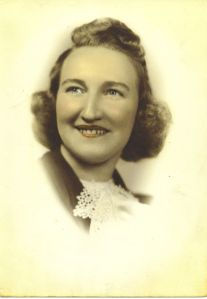
Photo of Agnes V. Flannery

Photo of Younkers Tea Room
2. Update: The Iowa Poetry Association, Inc. 2021-2025
Written by Marilyn J. Baszczynski in 2025
The Iowa Poetry Association (IPA) has undergone some significant transformations during the last five years, including adopting articles of incorporation and being accepted as a 501(c)(3) public charity. This tax-exempt status allows IPA to apply for grants to help fund our activities throughout the state. We continue to offer annual Lyrical Iowa Competition with poetry contests in adult and student divisions, all free to enter, judged by experts of national acclaim. Besides those awarded cash prizes or honorable mentions in the seven adult categories and four student divisions, many other top-ranking poems are showcased in our anthology, Lyrical Iowa, with over 300 poems selected from about 2,000 entries submitted to IPA’s contests, including six Pushcart Prize nominations. We hold online Student Reading Celebrations in June, where winning students are joined by the Iowa Student Poet Ambassador; adults enjoy an online Reading Celebration in October. Both student and adult winners are invited to read at the annual Poetry on the Prairie festival in November. Thanks to the Google Books Project and the University of Iowa Libraries who hold a complete collection of the Iowa Poetry Association's Lyrical Iowa anthologies, editions from 1946 to 2020 have been digitized and are free to view online. Bi-annual workshops, still one-day events of reading and discussion of poetry critiques led by distinguished Iowa professors, editors or poets, are held in April and October. These moved to a virtual format during the pandemic, then to a hybrid format (for those still wanting social distancing). In 2025, the workshops have become virtual only in April and in-person only in October. The in-person workshops will change location each year; this year in Ames. These workshops are offered free to IPA members; non-members may attend for $20. In addition to all the programs and events highlighted in IPA’s first seventy-five years, the association expands its support of students by partnering in the Iowa Student Poet Ambassador program, established in 2021, which recognizes an outstanding young writer and celebrates poetry and the literary arts in Iowa. The program is coordinated by the University of Iowa’s Office of Community Engagement. Iowa’s fifth ISPA, Daniel Somotochukwu Umemezie, was inaugurated in April 2025 in the historic Law Library at the Iowa State Capitol. Since the 2022-23 season, IPA hosts a series of poetry slams across the state in the search for our Iowa champion. The winner of the IPA Poetry Slam receives a sponsored spot to compete in the annual BlackBerry Peach National Poetry Slam held in partnership with the NFSPS National Convention. Iowa and the Iowa Poetry Association welcomed the NFSPS annual convention and the BlackBerry Peach National Slam Competition to the Greater Des Moines area as co-host of the 4-day event at the Marriott in West Des Moines in June 2023. In addition to NFSPS’s line-up of workshops, keynotes, slams, and readings, IPA organized “Iowa Day,” a super-charged day of headlining poets, workshops and performances, including by our Iowa Poet Laureate Deb Marquart and Iowa Student Poet Ambassador Lola Nakashima-Brooke. A wonderful opportunity to showcase some of Iowa’s talented poets. In fall of 2023, IPA welcomed a very dynamic new committee, Poetry Palooza, focused on offering multiple poetry events, free and open to the public. These include, but are not limited to: an annual Poetry Palooza in Des Moines in April, a two-day event highlighting talented poets of national and Iowa renown in performances and workshops, and who also conduct several school workshops; Poetry & Pie in the Park during summer months in the Greater Des Moines area; Poetry on the Prairie in Perry in November, a two-day celebration of performances and workshops as part of the annual Art on the Prairie art fest; Favorite Poem Project at the Des Moines Art Center; and many others. IPA program additions and expansions include IPA LIVE, a monthly series of online readings, workshops, and discussions, begun during the pandemic as a way to help IPA members stay in touch while continuing to grow, learn, and share poetry. This program continues presently, adding a monthly email update of IPA news and events. Our print newsletter, now six pages, continues as a quarterly delivered via USPS. To help with our outreach to Iowa schools, our IPA Teacher Liaison offers an annual forum for teachers to share best practices for poetry in the classroom, and our IPA Student Liaison shares resources and writing tips with students online. In 2025, our membership rates increased to $20 annually, the first increase in 25 years. Our membership numbers remain fairly constant at around 300 members from across the state. The anthology cost was raised to $15 in 2022, with free shipping for orders received by Oct. 1, shipping added for later orders. Our new website launch the summer of 2025 and offers online payment options. The Iowa Poetry Association, Inc., continues to grow. —submitted by Marilyn J Baszczynski
What is the "Iowa Poetry Day Association"
Following the lead of the state of Ohio, and initiated by Agnes V. Flannery, in 1943, Governor Bourke B. Hickenlooper issued a proclamation declaring the third Friday in October as Iowa Poetry Day. The next year the observation was changed to Saturday so that teachers and students could be free to participate. Later October 15th was set as National Poetry Day. Ms. Flannery, a Des Moines resident who had many published poems and awards to her credit, became the charter president of what was known as the Iowa Poetry Day Association. Actual founding date is October 20 or 21 (records vary), 1945, in Younker's Tea Room in downtown Des Moines. She also founded the Alpha Poetry Society in 1935 which she then established as the Alpha Chapter Poetry Society, a Des Moines branch of the Iowa Poetry Day Association in 1945. By 1948 the word DAY had been omitted by some of the officers from the name of the organization, whether accidentally or intentionally is not clear, though a formal vote to change the name did not occur until the next year. The result was a heated controversy which resulted in a split into two distinct organizations with Ms. Flannery continuing to head IPDA. In Iowa Poetry Day Association's 1950 booklet, six pages were devoted to that organization's history and their version of the disagreement, with such strong statements as: "The vital word DAY was omitted," "an illegal fact!" (referring to Harriet R. Bean as 'organizer' of IPDA), and "The members of IPDA, knowing that we are still a 'Democracy,' believe they should have a voice in an organization into which they pay dues, and of which they are a part." IPA published Lyrical Iowa and IPDA's annual anthology was called "Brochure of Poems." IPA and IPDA continued their co-existence, peaceful and otherwise, with many poets belonging to both groups, until the latter's merger with the Iowa Chapter of the Midwest Federation of Chaparral Poets in 1984. The IPDA, however, no longer exists; they merged with the Midwest Federation of Chaparral Poets in 1984. Here is a brief note: The Midwest Federation of Chaparral Poets (Chaparral Poets) was formed in 1942 under the leadership of Margarette Ball Dickinson of Minnesota, and consisted of three autonomous co-equal chapters: Minnesota, Iowa, and Nebraska; Kansas was added later. The Iowa Chapter of Chaparral Poets met twice yearly (fall and spring); they studied poetry, conducted a poetry contest and wrote poetry for submission to Midwest Chaparral magazine. The biannual meeting locations changed but the Iowa Chapter often met in Cedar Rapids. In the mid 1980s the Iowa Chapter merged with the Iowa Poetry Day Association. The Iowa Chapter of the Midwest Federation of Chaparral Poets disbanded in the fall of 2001 due to a dwindling membership and a lack of volunteers for leadership roles.